BioMovement AmbientalFale com um especialista
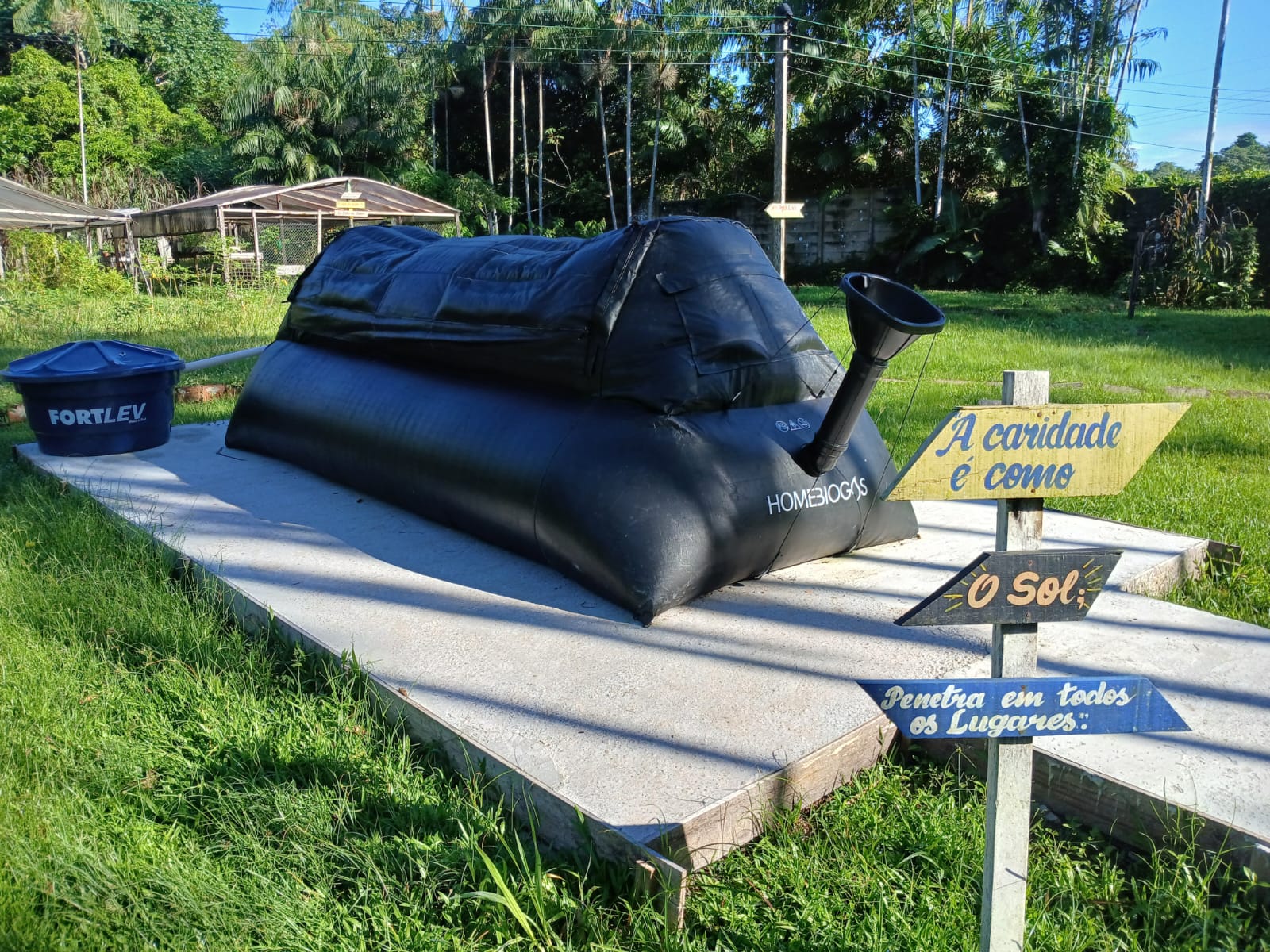
HomeBiogas biodigester

BioMovement + HomeBiogas

Environmental education with school biodigesters

A Brazil-based, 36-month education program with HomeBiogas, teacher training, 12 lessons and documented impact references.

Website in Portuguese, English and Spanish. The Brazil-based program and teaching material are in Portuguese, based on BNCC and Brazilian legislation.

Talk to BioMovementFull page in Portuguese

Public management: Technical Cooperation Agreement and confirmed sponsorship; evidence may support PNE targets 8.a and 8.c. Legal characterization belongs to the agency’s legal advisers.

Private schools: a BNCC-aligned educational project, teacher support and science experiences for family visits and school enrollment presentations.

ESG sponsors: documented indicators may support GRI reports, CDP responses and index processes such as ISE B3. No certification is promised.

What you receive

Tangible and measurable benefits for your institution

Practical Environmental Education

36 months of structured program with continuous educational experiences

Auditable ESG Metrics

Quantified data for GRI, CDP reports and corporate communications

Permanent Legacy

Infrastructure may be donated at program end under the signed agreement

Complete Governance

Technical visits and quarterly reports with full transparency

How It Works in Practice

The program transforms the school into a living laboratory for learning, where students experience sustainability concepts through practical and measurable experiences.

Living Learning Laboratory

The school becomes a space for educational experience, where concepts of sustainability, circular economy and environmental responsibility are learned in practice.

Integrated Teaching Tools

Organic waste, clean energy production and seedling cultivation are used as pedagogical instruments to teach science, biology, chemistry and environmental citizenship.

Applied Environmental Education

Practical planting actions and environmental care are integrated into the school curriculum, transforming theory into lived experience for students.

School and Community Engagement

Teachers, students and families actively participate in educational activities, strengthening the bond between school and community around sustainability.

Practical learning, educational experience and applied environmental education in one program.

Program Structure

Operational model (OPEX) with governance and metrics for ESG

Per School

Consult conditions

Duration: 36 months

The Program Includes

Complete educational program with structured methodology

Initial training for educators and school staff

Pedagogical instruments installed and maintained during the program

Educational nursery with capacity for 60 native seedlings

Continuous technical support and preventive maintenance

Quarterly in-person technical visits

Detailed educational and environmental impact reports

Possible donation at program end under the signed agreement

Pedagogical Hub with 12 thematic explorations organized by school stage (Early Childhood, Elementary I and II), with prompting questions, BNCC alignment and hands-on activities for teachers

Legacy at Program End

At the end of 36 months, infrastructure may be donated under the signed agreement. Continuation conditions are defined in that agreement.

Contact us for more information

Schedule a Conversation

Educational and Socio-Environmental Metrics

Per-unit references over 36 months, assuming 360 operating days per year; not guaranteed results.

📊 Data used for ESG, GRI reports and educational indicators

Impact per School (36 months)

21.6 t
CO₂e avoided over 36 months (7.2 t per year)

Per-unit estimate using our own methodology (Methano Protocol).

Methodological reference metric (Methano Protocol). It does not constitute a certified carbon credit nor an asset with commercial value.

10.8 t
Waste as Educational Tool

Up to 10 kg/day × 1,080 operating days over 36 months.

90
Clean Energy Cylinders

Up to 2.5 LPG cylinders per month; 90 over 36 months.

300+
Students per school — estimate

Estimated 300+ students per school during the program cycle.

180
Native seedlings produced

180 native seedlings produced in the pedagogical nursery over 36 months, for planting and environmental education (60 per year).

21,600
Liters of Natural Fertilizer

Up to 20 litres/day × 1,080 operating days over 36 months.

Each school becomes a living point of education and environmental regeneration, with traceable data for corporate and governmental accountability.

Governance and Reports

Monitoring and accountability structure that ensures transparency, traceability and compliance with corporate ESG standards.

Quarterly Technical Visits

In-person monitoring every 4 months with indicator verification, pedagogical support and documented photographic record.

Quarterly Reports

Detailed documentation of educational and environmental metrics, with quantified data for institutional accountability.

Consolidated Annual Report

Executive summary with all period indicators, ready for integration into ESG, GRI reports and corporate communications.

Transparency and Traceability

Indicators may support GRI reports, CDP responses and index processes such as ISE B3.

Data Protection

Brazilian LGPD (Law 13.709/2018), including article 14 for children and adolescents. Student images are published only with legal guardian authorization. Use for technical monitoring and educational indicators; commercial exploitation is prohibited.

Documented Indicators

Environmental

Waste, energy, seedlings, fertilizer

Educational

Students, activities, engagement

Social

Families, community, plantings

Brazilian legal sources are presented in their original Portuguese wording.

Institutional Alignment

Program structured in compliance with legal frameworks and international ESG standards.

Sustainable Development Goals (UN)

4

Quality Education

Living learning laboratory with practical environmental education integrated into the school curriculum.

6

Clean Water and Sanitation

Practical teaching on responsible use of water resources and educational fertigation.

7

Affordable and Clean Energy

Pedagogical demonstration of clean energy generation from organic waste.

11

Sustainable Cities

Pedagogical nurseries and planting actions that integrate school and community.

12

Responsible Consumption

Practical education on circular economy: waste as an educational resource.

13

Climate Action

Awareness about emission reduction through sustainable waste management.

17

Partnerships for the Goals

Technical cooperation model between the public sector and private initiative for continuous environmental education.

BNCC

BNCC

National Common Curricular Base (BNCC)

General competencies 2 (scientific thinking), 7 (argumentation with data) and 10 (citizenship). Natural Sciences and Geography skills integrated by school stage.

Educação, clima e responsabilidade

Marcos legais brasileiros

Lei nº 9.795/1999 — PNEA

Política Nacional de Educação Ambiental

“A educação ambiental é um componente essencial e permanente da educação nacional, devendo estar presente, de forma articulada, em todos os níveis e modalidades do processo educativo, em caráter formal e não-formal” (art. 2º).

Decreto nº 4.281/2002

Regulamentação da PNEA

Regulamenta a PNEA e orienta sua implementação nos sistemas de ensino.

Portaria MEC nº 642, de 16/09/2025

Educação para a Cidadania e para a Sustentabilidade

Institui o programa para assegurar a implementação dos temas transversais contemporâneos expressos na BNCC. Prevê parcerias com órgãos públicos, escolas de formação, instituições de ensino superior e pesquisa e organizações da sociedade civil para formação de educadores.

Portaria MEC nº 734, de 25/09/2026

Política Nacional de Educação Ambiental Escolar — PNEAE

Institui a PNEAE em conformidade com a Lei 9.795/1999, o Decreto 4.281/2002 e a Lei 15.388/2026, com educação ambiental transversal e integrada ao currículo da educação básica.

Lei nº 15.388, de 14/04/2026

Plano Nacional de Educação — Objetivo 8

Promover a educação ambiental e o enfrentamento das mudanças do clima em todos os estabelecimentos de ensino. Meta 8.a: até o 5º ano de vigência, no mínimo 60% das redes de ensino com planos de prevenção, mitigação e adaptação às mudanças do clima implementados, e a totalidade até o fim do decênio. Meta 8.c: todas as instituições de ensino promovendo educação ambiental com base na PNEA e nas diretrizes curriculares nacionais do CNE.

Decreto nº 11.003, de 21/03/2022

Estratégia Federal de Incentivo ao Uso Sustentável de Biogás e Biometano

Institui a estratégia federal de incentivo ao uso sustentável de biogás e biometano.

BNCC

Base Nacional Comum Curricular

Competências gerais 2 (pensamento científico, crítico e criativo), 7 (argumentação) e 10 (responsabilidade e cidadania).

Lei nº 13.709/2018 — LGPD

Proteção de dados e imagens de estudantes

Inclui o art. 14, para dados de crianças e adolescentes. Imagens de estudantes são publicadas somente com autorização dos responsáveis legais.

ESG and GRI Indicators

GRI 413

Local communities

Documented educational and social impact in school communities.

GRI 305-5

Avoided Emissions

Emission reduction through LPG substitution and organic diversion from landfills.

GRI 306

Waste Management

Treatment at source with noble destination of by-product as fertilizer.

ISE B3

Corporate Sustainability Index

Indicators may support GRI reports, CDP responses and processes such as ISE B3; they are not certification or a guarantee of compliance.

Documentation for Compliance

  • • Auditable quarterly KPIs (waste, energy, seedlings, people impacted)
  • • Reports that may support GRI, CDP and corporate sustainability processes
  • • Photographic and documentary record of all educational activities
  • • Storytelling with testimonials and evidence of social impact
  • • Complete traceability for public and private accountability

Continuous Education with ESG Governance

A structured, legally secure, measurable educational program aligned with the highest standards of corporate sustainability and socio-environmental responsibility.